


Travel trade applauds Greece for ‘common sense’ suspension of EES checks
FCDO advice updated but uncertainty remains over implementation of plans


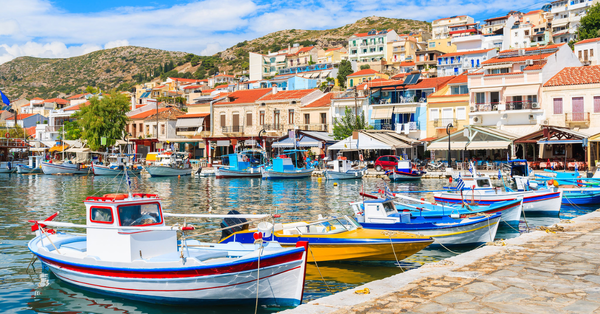
Independent operators and agents have applauded Greece after it announced it would suspend biometric checks for UK travellers under the EU’s Entry/Exit Scheme (EES).
FCDO advice for travellers to Greece was updated on Monday afternoon to say: “Greek authorities have indicated that they will not collect biometric data (fingerprints and photos) for UK travellers as part of EES. Follow the advice of authorities on the ground.”
But some in the trade remain uncertain about the implementation of the move, with official Greek government statements announcing the decision no longer visible.
Aito, the Specialist Travel Association, welcomed the news in an update on EES and called for a flexible approach to the introduction of the new biometric border checks as some countries are more prepared than others.
Advantage Travel Partnership chief executive Julia Lo Bue-Said posted on X on Monday: “Greek authorities won’t collect biometric data fingerprints/photos, for UK travellers under EES. FCDO advice now updated, follow local guidance. A common-sense proactive move, easing border delays experienced elsewhere, keeping UK–Greece travel flowing.”
Holiday Extras chief executive Matthew Pack described Greece’s decision as “exactly the kind of common sense we’ve been calling for”.
He added: “The system was always well-intentioned, but the reality at the border - long queues, missed flights and frustrated families - was never acceptable.
“Holidaymakers don’t go to Greece to queue; they go to enjoy the sea, the food and the culture, and every unnecessary minute lost at passport control chips away at that experience.
“We expect Greece to be the first of many destinations to step back and ask whether the bureaucratic cost is really worth it, and we’d urge others to follow suit.
“We’re in the business of making travel smoother from the moment people leave home - and a border system that reliably derails journeys before they’ve even started runs counter to everything that should make European travel great."
Aito head of industry affairs Christine Brazier said: “The first weekend of full EES implementation resulted in longer wait times and reports of missed flights. While unfortunate, this is precisely what the travel industry flagged ahead of the rollout. We must learn from these initial lessons before the busier summer period.
“In terms of regional impact, we have already seen congestion issues in the lead-up to Easter in the Canaries, where border controls were already under pressure.
“Looking ahead, there are real concerns regarding how smaller airports, such as those in the Greek islands, will cope with summer volumes, so the news on Friday from the Greek Embassy that British passport holders travelling to Greece may be exempt brings a collective sigh of relief.”
She added: “Along with delays and long wait times there is also concern around the impact on customers with additional needs due to age or health.
“For instance, the requirement at the Dover crossing for coach tour passengers to disembark for checks is not only time-consuming but particularly difficult for those with limited mobility.
“We understand that a pragmatic approach is currently being taken at Dover with some checks being eased to maintain flow and it is vital that this pragmatism continues and becomes the standard across all borders.
“We do not disagree with the principle of enhanced security, but because some countries are clearly more prepared than others, there is a need for a flexible approach.
“Border controls must have the autonomy to relax or suspend checks proactively in anticipation of peak-season queues and take the initiative rather than merely reacting once the congestion has already built up."
Aspire’s sister title Travel Weekly has contacted the relevant authorities for clarification on the implementation of the relaxation in Greece.
Related to this story

French lockdown forces ski resort closures


Saint Lucia approves tourism levy
Editor’s Pick
Suggested For You







Jacobs Media is a company registered in England and Wales, company number 08713328. 3rd Floor, 52 Grosvenor Gardens, London SW1W 0AU.
© 2025 Jacobs Media
